Paul Hopkins with Ethical AI by AppSite · Reflections · Part 1 of 3 · 3 min read
Series: Part 1 · Part 2 · Part 3 · The series
We stare at our screens for so long that we stop seeing the smudges. The same thing happens to our goals. A short story about attention, habits, and the beliefs that shape what we see.
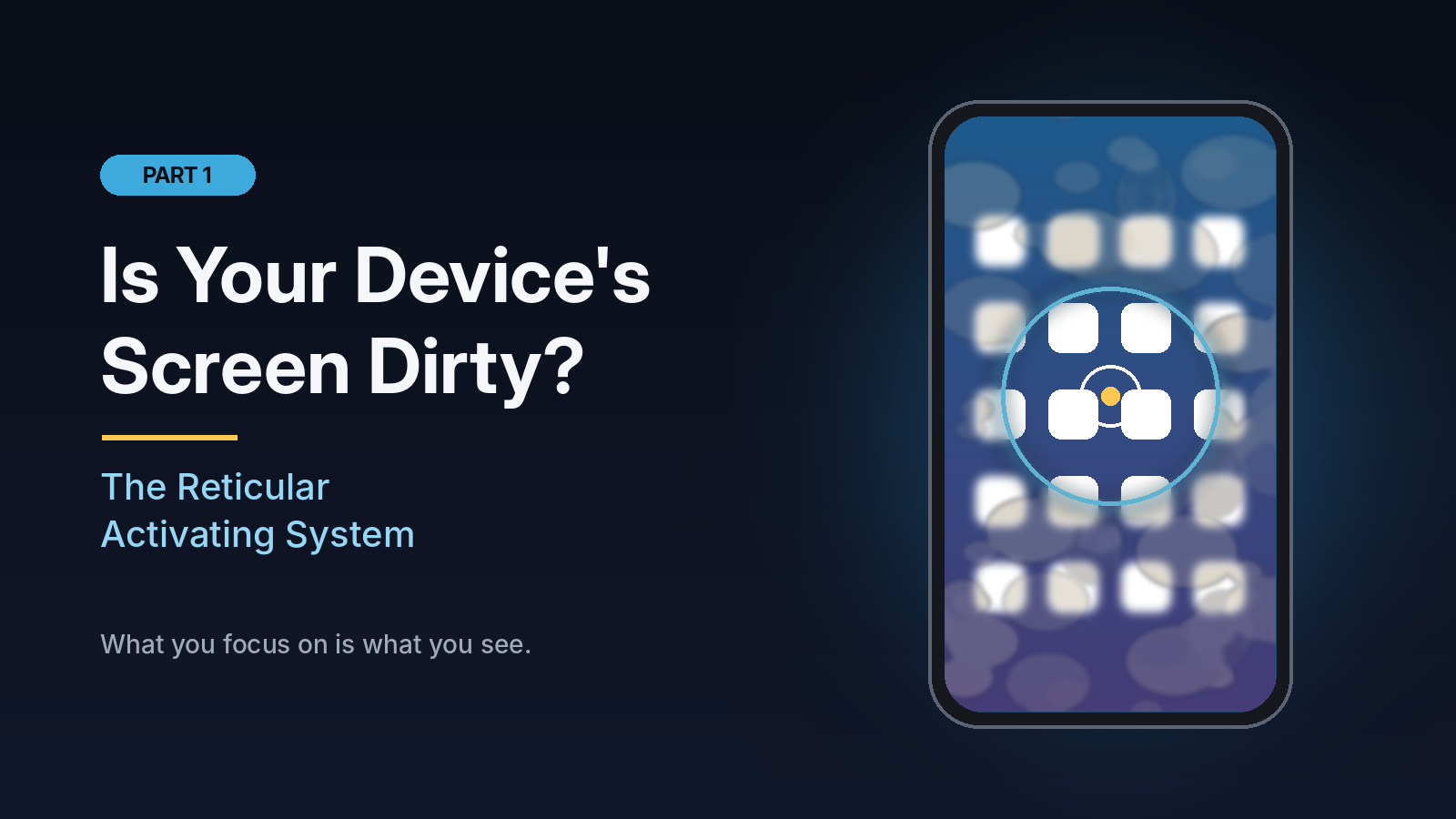
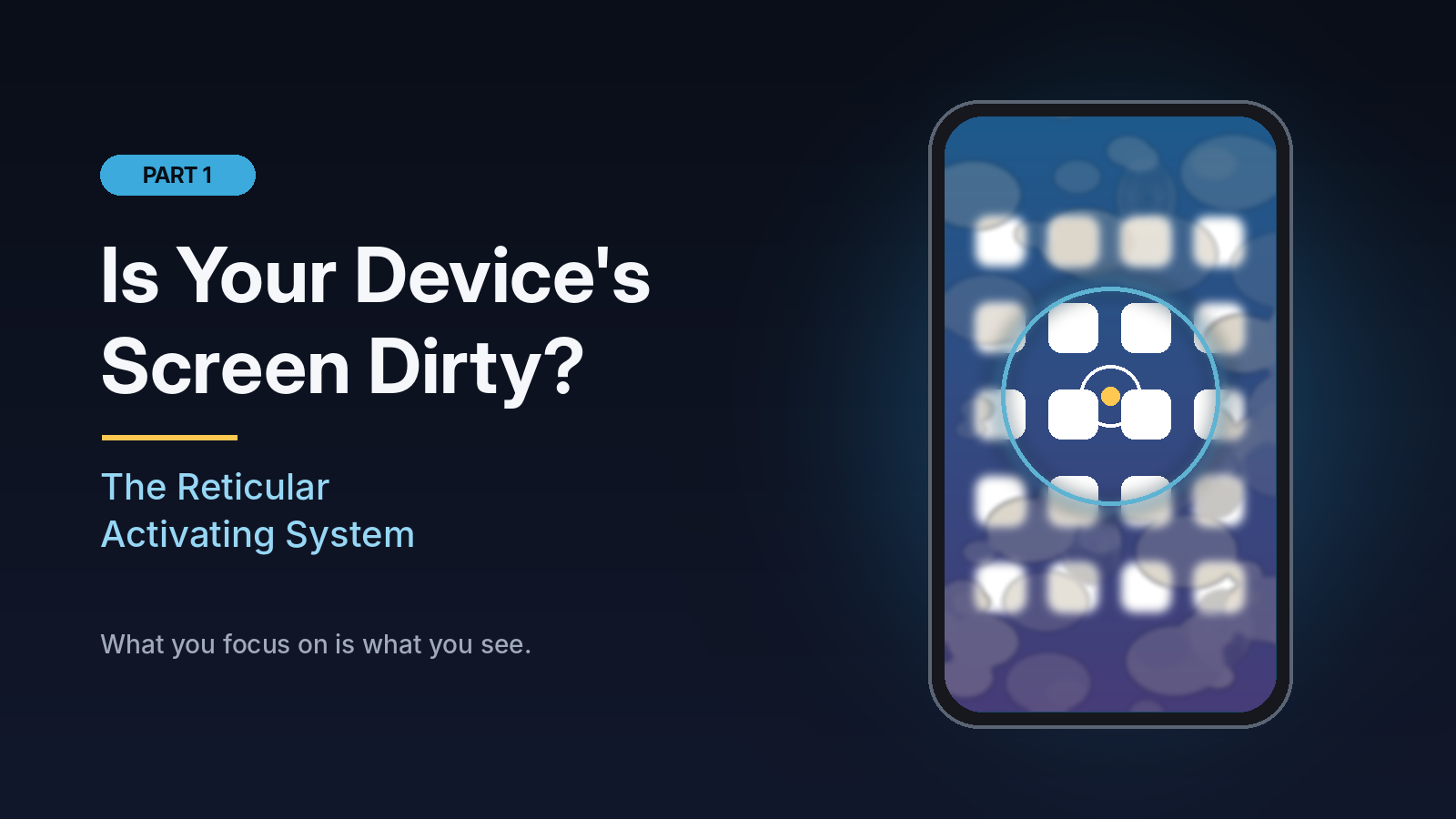
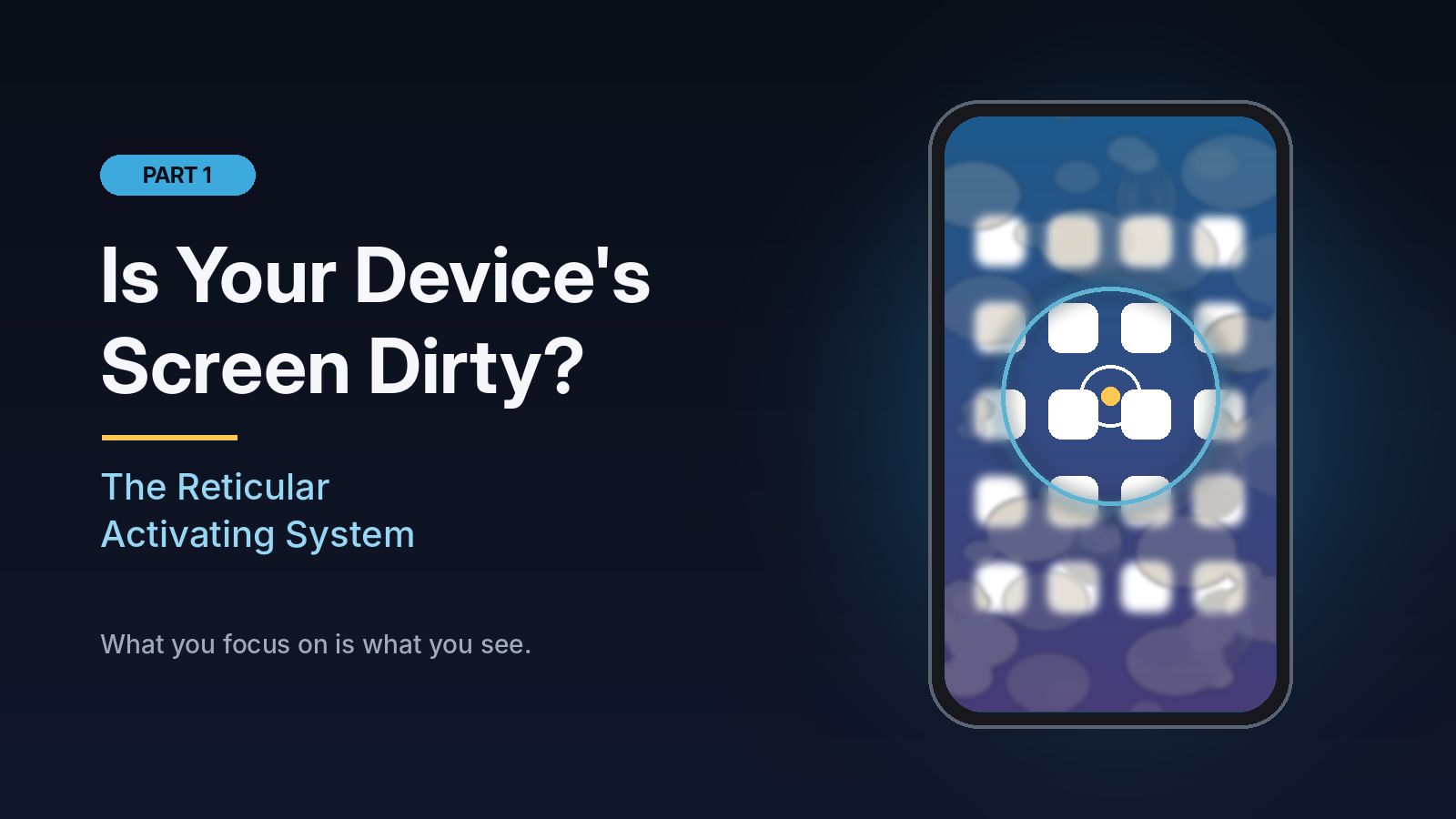
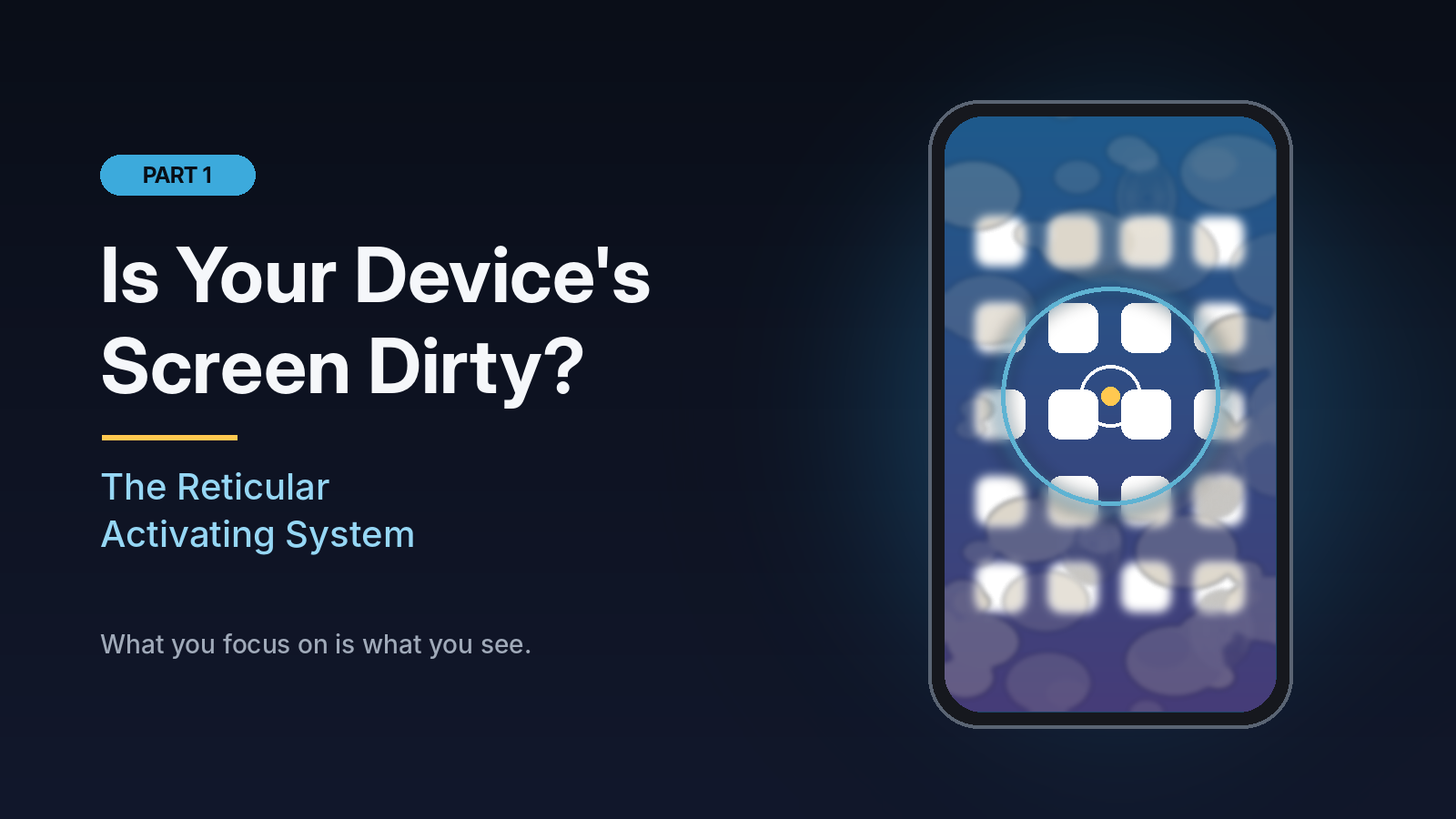
Is your device's screen dirty?
Look at it for a moment. Not through it. At it.
Most of us stare at a screen for hours every day, so long that the fingerprints, the dust and the smudges disappear. They are there the whole time. We just can't see them anymore. Being focused on the work in front of us has a side effect: we look right through the grime, and we can't see it.
A lesson from the 1980s
From 1987 to 2001, I worked at Trailer Town RV City. For most of those years I worked alongside my brother, Dale. I think he was my first employee. I remember him fondly from those days, and I miss him dearly.
The company was forward thinking and always looking for ways to connect with its staff and its customers. One of the things it did was bring in the Pacific Institute, out of Seattle, led by its founder, Lou Tice. It was powerful, and it was exactly what we needed at the time.
The session that stayed with me was about the reticular activating system. It is a network of cells in the brainstem that helps decide what reaches our attention. The way it was taught to us, it works hand in hand with the conscious and the subconscious mind, and it is in charge of what we notice and what we let fade into the background. That means it has a hand in many of the choices we make, and in how we manage our own thoughts.
Shortly after, the company opened its financial statements to its managers, and we started holding regular budget meetings. Looking back, it was a pivotal time. People started seeing what had been in front of them all along.
Those lessons were critical. They taught me that there is more beneath the surface, and not to trust everything I see. What we see is shaped by our experiences and our beliefs. When our beliefs are out of alignment, it is hard to believe in what we are doing, or even in what we are seeing. When that happens, it isn't the time to push forward. It's time to go back to those beliefs and set them right.
For me, going back means going back to the stories. Whenever I am looking for understanding, or forgiveness, or a way through a problem, I find myself returning to experiences like these. I remember them well. They remind me that I'm human, and that there is more beneath the surface.
The stain on the carpet
Think of a stain on a carpet. Ours came in the mid-90s, when my daughter was two. She poured a two-litre plastic jug of grape juice out in front of our 26-inch CRT TV, then danced in it to Barney. The carpet ended up the same colour as the dinosaur. It was a frightening sight.
The moment it happens, a stain like that looks terrible. You can't stop seeing it. But after a week you almost forget it is there, especially when it sits just inside the doorway, in plain sight, where you walk past it every day. It is still there. You just can't see it.
Lou Tice had a word for this: a scotoma, a blind spot. Not something hidden from us, but something right in front of us that we have stopped seeing.
I think of this in life. I think of the things I want to do, and I put my sights on them. And then I forget, just because time passes. It isn't a character flaw, and it isn't really my fault. It's the way the brain works.
So one way to improve our habits is to improve the way we see things, and the way the messages reach us. We get so bogged down in today's world of devices and tools that it is hard to focus. At least I find it so.
Wipe the screen
Picture a manager walking by your desk: "Clean your screen. It's filthy. Can't you see it?" Maybe not. Maybe you are so engaged in the work that you care more about the results than how you look getting there. That isn't a bad thing. But we can look a little prettier, too.
I just cleaned mine. It was terrible.
So, today, wipe the screen. Then ask yourself what else you have stopped seeing, and whether your beliefs are still pointing you where you want to go.
Coming up in Part 2: locus of control, and keeping control of your work where it belongs.
Next: Part 2: Locus of Control →
A note on where we are: AppSite is currently in beta. We have active users, and we are inviting more people onto the platform as we develop. You can view the status of any of our modules, and our compliance work is in progress.